Thursday, January 5, 2012

Final Paper


America is a diverse country where there are many different cultures and many different backgrounds that people may come from. People want to come to America because of the freedoms that it has and because it is safer than other places around the world. Being a different race is hard for some people living in America because of the many stereotypes that may go on today. Marginalized Voices is the theme that leads to my thesis of how America should be a place where everyone is accepted, and while we think everyone is accepted, some people are still discriminated for their race or for who they are and what they believe.  
                The general point made by Lance Jeffers in his work My Blackness is the Beauty of this Land,  is that there is a love hate relationship with being a different race and with being black.  More specifically Jeffers love hate theme suggests and American salvation in our understandings of one another. He writes “My blackness is the beauty of this land, my blackness, tender and strong, wounded and wise, my blackness (p.611).” In this poem Jeffers only is suggesting that by being black it sets him apart and makes him different from everyone else. He is proud to be black, notice the title My Blackness Is the Beauty of the land. The poem says that his blackness is tender and strong, and wounded and wise. His blackness makes him wise and strong,  yet it also makes him wounded. This is an example of the love hate relationship that he has with being black. Jeffers also writes, “While I here standing black beside wrench tears from which the lies would suck the salt to make me more American than America…but yet my love and yet my hate shall civilize this land, this land’s salvation (p.611).” This quote explains that his love hate of being black will civilize the land and its salvation. In conclusion it is Jeffers belief that the love hate relationship of being black civilizes the land in which we live.
                In my view Jeffers is right, because at this time when the poem was written, it was really hard to be black and be an American as well. For example many blacks faced hardships back then and they did not let those hardships affect them and they stood up for what they knew was right. One person that comes to my mind when I was thinking of this was Rosa Parks.  She would not allow the person on the bus to just send her to the back of the bus just because she was black. This probably took an enormous amount of courage on her part to stand up for herself in a time that blacks were looked down upon.  The Jim Crow Laws were also being enacted at this time in the early 1900’s. The Jim Crow laws said that black Americans were separate but equal. Blacks and whites were separated in schools, stores, and any other public setting that they might be in at the time. Although some people might object that there was a love hate relationship with being black at this time, I maintain that it was a love hate relationship for many of the African Americans. Therefore, I conclude that the fact that many blacks had this love hate relationship with being the color that they were, this made them stronger and made them stand out as people who wanted to be respected for not just the color of their skin, but for who they were as individuals as well.
                The next work that I thought would be good to connection to my thesis of how some people are and were discriminated for their race, is Growing up Asian in America.  The general arugument made by Kesaya E. Noda in her work Growing up Asian in America, is that America has come a long way as far as accepting Japanese people into our country.  Noda still says it can sometimes be hard when people always stereotype Asians, and call her names such as an Asian woman. More specifically Noda suggests that her parents and grandparents had to deal with a lot of persecution, and she had to deal with different types of problems by being a Japanese American. She says that it was hard for her to feel like she was worth something. She felt like she was an alien in her own country. While she was going through trying to find out who she was, Noda was able to reminisce and find strength through what her parents and grandparents faced. Noda writes, “ “Weak.” I hear the voice from my childhood years. “Passive,” I hear. Our parents and grandparents were the ones who were put into those camps. They went without resistance; they offered cooperation as proof of loyalty to America (p.642).”  She found strength in knowing that her family was that cooperative just to show their loyalty towards America. She also wrote, “In those circumstacnes it was difficult to say, I’m a Japanese American. American had to do. Byt now I can say that I am a Japanese American. It means I have a place here in this country too (p.643).” In conclusion it is Noda’s belief that she too has a place in America now, and that America has come a long way in accepting Japanese Americans now.
                In my view Noda is right because I too think that America has come a long way in accepting a variety of different races and ethnicities. For example in this passage she tells about how her grandparents were in Japanese internment camps, and now that is looked back upon as wrong and America would never do that. Although some people might object that Americans are still racist, I maintain that America has come a long way and people are a lot more accepting than they ever used to be. Therefore I conclude that America is a great country that accepts many different types of people. All the different types of people is what makes our country and our culture unique. We are proud to be Americans.
                Next I am going to talk about Freedom and Responsibility.  The general argument made by Karl Shapiro in his work The Conscientious Objector, is that you can feel rage towards those who called you a traitor just because you object to something. More specifically Shapiro suggests that the mindset of the imprisoned objectior struggles with the rage of people calling you a traitor. In the description of the poem Shapiro asks us to consider whther they may be deemed heroes in their own right. He writes, “Yet wou who saved neither yourselves nor us are equally with those who shed the blood the heroes of our cause. Your conscience is what we come back to in the armistice (p.765).” One who objects and voices their opinion can be equally just as important as heroes who shed blood for our country. In this passage Shapiro is suggesting that one who always objects may get criticized for objecting but they are can be considered heroes for actually standing up for what they think and not being afraid to tell everyone their opinion. In conclusion it is Shapiro’s belief that an imprisoned objector can just as well be a hero for not just letting certain issues slide. They may be a hero if what they stand up for is justly right.
                In my view Shapiro is right because I think that if someone has an objection because we live in a country where we have the freedom of speech. I think that it takes a lot of courage for someone to object to something and then to have to deal with all the criticizing of the people telling them that they are a traitor and they are wrong. I think if the person who objects and stands up for what they think, can be considered a hero. Although some people may say that someone who always objects are not considered a hero, I maintain that someone who has the courage to object can be considered a hero. Therefore I conclude that people always have a certain view on something and when someone or something tries to contradict that view they get upset and try to make the person feel wrong for voicing their opinion, rather than trying to see how they view it and being respectful towards their views.  
                The general argument made by Vonnegut in his work Harrison Bergeron is that you can’t have government forced equality. More specifically forcing equality on people would make people rebel and cause a lot more problems in the society. He wties, “They were equal every which way. Nobody was smarter than anybody else. Nobody was better looking than anybody else (p.778).” In this passage Vonnegut is suggesting that if everyone were to be equal that it would take away the significance of being who you are. Bergeron is a character that decided to rebel against being equal with a ballerina. They danced and took off their handicaps. They were then shot for rebelling against the government. In conclusion, it is Vonnegut’s belief that if we were to have a equal society there would be a lot of trouble and a lot of problems in the society.
                In my view, Vonnegut is right because if everyone were to be equal then nobody would be unique and it would make a very bland society. People would get frustrated about being equal and would rebel. I know I would absolutely hate living in a society that was like this. The fact that Beregron stood up for himself and wouldn’t be viewed as just like everyone else, amazes me. For example he had courage to show off who he really was in a society where everyone was hiding under ugly masks and handicaps. He was very brave to show off his skills at dancing as well.  Although some people think we should all be equal, I think that it is our difference that makes us all unique. Therefore I conclude that I am glad everyone is different, because if everyone was the same it would be very boring.
                I conclude from all these passages that the color of our skin does not define who we are, and we need to accept people for whatever cultural background they may come from. I conclude that we need to think of the people who have a different opinion on something, and try to see where they are coming from before we ridicule them. We also need to realize that in this world everyone is different and that if we were all equal there would be no joys. Being different sets you apart as an individual. I think it is to important to remember that we do have voices that we can speak up if we don’t agree with something. I also think it is important for us to reflect upon the many freedoms that we have living in America. We are free to be different without being ridiculed. We are free to speak when we want to. We are free to worship how we want to and when we want to. We have so many freedoms and I think we need to stop and be grateful for all of those freedoms, and be grateful for all those people that made it so we can have a wonderful country to live in. I think it is amazing that we can look past all the different colors of peoples skins, all the different backgrounds, and all the different personalities, and be unified as one, we are unified as a country, and we are a part of United States of America.
Citations

Jeffers, L. (1970).  My blackness is the beauty of this land. That is the Question. (P. 611)
Noda, K.  E. (2007). Growing up Asian in America. That is the Question.  (Pp. 641-645)
Shapiro, K. (1944). The conscientious objector. That is the Question.  (P. 765)
Vonnegut, K.  (1961) Harrison Bergeron. That is the Question. (Pp.778-781)

Selected Songs pg.915-916


The general argument made by Bob Dylan in his selected song, With God on Our Side, is that when God is always on our side things go better. More specifically Dylan suggests that after the war is over and if you forgive, God is on your side. He writes, “When the second World War came to an end we forgave the Germans and we were friends though they murdered six million in the ovens they fried the Germans now too have God on their side. (pg.915)” This passage suggests that you can do anything that is right with God on your side. In conclusion, Dylan is suggesting that when God is on your side things go the way that you want them to.
In my view Dylan is right, because I think when God is on your side you can do anything, as long as it is for the correct purpose. For example he also says,”…It taught and brought up there the laws to abide and that land that I live in has God on its side. (915)” Dylan is saying that God is on our countries side. I think that he right. We have so many freedoms from soldiers who have sacrificed for us. Therefore I conclude that Dylan was right. 

When You see Millions of the Mouthless Dead Pg. 849


The general argument made by Charles Hamilton Sorley in his work When you see Millions of the Mouthless Dead, is that in war you see many people die and it is really hard to deal with. More specifically Sorley suggests that death takes many people in the war. He writes, “Perceive one face that you loved heretofore, it is a spook. None wears the face you knew. Great death has made all his for evermore.  (Pg.849)” in this passage Sorley is suggesting that you see many people die and when you see someone you love die, it doesn’t even look like them. In conclusion, it is Sorley’s belief that it is very hard to watch many people that you know and love die in the war.

In my view I think that Sorley is right because I can only imagine what it would be like to watch that many people die. It would be very scarring. For example some people come back from the war and have post-traumatic stress from killing people, and from watching so many people get killed. I feel bad for all the soldiers that have to watch people die. Therefore I conclude, that it is ok for people to be sad when they lost someone that they worked with.

The Last of the Light Brigade Pgs. 838-839


The general point made by Rudyard Kipling in his work The Last of the Light Brigade, is that people should appreciate what soldiers have sacrificed for them. More specifically, Kipling suggests that these men sacrificed everything that they had to defend their country. He writes, “Our children’s children are lisping to honour the charge they made. And we leave to the streets and the workhouse the charge of the Light Brigade! (pg.839)” This passage suggests that soldiers sacrifice for us and we should honor them for what they do for us. In conclusion we should remember our soldiers, and all they do for us.

In my view Kipling is right because we do need to appreciate our soldiers more. For example I think that many people often overlook the soldiers and what they do for us. I am glad that they do so much for us and I think that we need to take more time to thank them for what they do for us.  

I Would Not say Anything for a Man pg.818-819


The general point made by Tyrtaeus of Sparta in his work I would not say anything for a Man, is that it is hard for a man to prove himself for war. More specifically Tyrateus describes what a man can do to prove himself for war. He writes, “For no man ever proves himself a good man in war unless he can endrue to face the blood and the slaughter, go close against the enemy and fight with his hands. (Pg. 818)” In this passage Tyrtaeus is suggesting that every man should be a valiant warrior, and to do that he must endure the blood, sweat, and tears that come along with going to war.  In conclusion, it is Tyrtaeus’s belief that to prove oneself fit for war, you must be valiant and endure all that war has to offer.

In my opinion, Tyrateus is right because people who die for their country deserve all the praise that comes from fighting in a war. I think whether or not they died or if they are still alive their service is valued. Although some people might argue that the dead soldiers should be talked about, I maintain that both dead and alive soldiers should be talked about for their service. Therefore, I conclude that it is hard for a man to prove himself for war, especially when so many people view it differently. 

On Glory in Warfare Pg. 817


The general argument made by Callinus in his work On Glory in Warfare is that a man should fight in war for good causes. More specifically Callinus suggests that a mine should show honor towards his country by fighting for his family and fellow citizens, and for the land. He writes, “For all the populace is grieved for the high-hearted warrior after his death, while he lives, he is treated as almost divine. (Pg. 817)” In this passage Callinus is suggesting that people grieve if a warrior dies for the right reasons.  In conclusion, it is Callinus’s belief that a man should have an attitude of fighting for his country.

In my view, Callinus is right because we need people to fight and go to war to claim what they think is right and what they need as a country. For instance, where would we be today if we didn’t have soldiers fight for our freedoms? Although some people might object that going to war is bad and can be avoided, I believe that if the war is for a good purpose that we should send troops to war. Therefore, I conclude that going to war isn’t always a bad thing, when it can save people’s lives and help your country in any way. 

What Should a Billionaire Give-And What should You? Pgs.804-811


The general argument made by Peter Singer in his work What should a Billionaire Give-And what should you Is that human life is of lot more worth than having a lot of money, or being popular. More specifically too many people get caught up in being rich and having fame, when they should be focusing on what they have to give. He writes, “…that a human life, if it can be priced at all, is worth millions, and that the factors I have mentioned do not alter the value of a human life-square with our actions.” (p.804) This passage is suggesting that individuals are of lot more worth than some think they are. In conclusion, it is Singers belief that if you have a lot of money you should donate it towards a good cause, and you shouldn’t get too caught up in being rich. You need to think about the many people who may be in need.

In my view Singer is right because in this world you can see that many people get too caught up on if they are wearing the hottest trend, and if they have a lot of money. But money can’t buy you happiness. What truly makes you happy in life is helping other people out. For example when I help others I find myself a lot happier than usual. Although some people think that they need to be rich and have a lot of things in this life to be happy, I think that serving people and giving people all you have to give will make you happy. Therefore, I conclude that human life is very important, and we should not take for granted what life has to offer us. 

That Damned Fence pg. 745


The general argument made by the anonymous writer in their work The Damned Fence, is that although they had endured many hardships in those camps, they could still remain loyal to their country. More specifically some people were able to overlook what had happened to them and not let it affect their lives when it was over and done with. They write, “But we’re here because we happen to be Japs. We all love life, and our country best, Our misfortune to be here in the west, to keep us penned behind that DAMNED FENCCE Is someone’s notion of NATIONAL DEFENCE!(p.745)” That quote really speaks out for the Japanese people. This is a Japanese American that realizes that it is not right for them to be in these camps, yet they understand that it is a national defense, and they still can say that they love live. In conclusion, it is the anonymous author’s belief that despite all the Japanese Americans had to go through, they were still able to remain loyal to their country, and that right there shows true patriotism.

In my view the anonymous writer is right because I am sure some were able to forgive all the horrible things that happened to them, and I am sure some absolutely hate Americans for what happened to them. For example in this passage it says that they feel terrible, lonesome, and blue, and yet they still say they love life. This passage shows a very optimistic persons point of view towards the whole situation. Although the Japanese Americans were treated horribly, they were able to say they still loved life and their country. They were amazing people for being able to forgive. Therefore, I conclude that the Japanese Americans were still very patriotic despite all that happened to them.  

To the Lady pg. 744


The general argument made by Mitsuye Yamada in her work To the Lady, is for us to think about who is responsible for the injustice done to Japanese Americans by Executive Order 9066. More specifically, Yamada suggests that it was not just the governments fault for what happened to the Japanese Americans. She writes, “But we didn’t draw the line anywhere law and order Executive Order 9066 social order moral order internal order You let’m I let’m All are punished (p. 744).” This passage is suggesting that the people who knew that it was wrong and just let it pass by should have done something to stop it. In conclusion, it is Yamada’s belief that the people of our country who knew that this was wrong should have done something about it.

In my view Yamada is right because as I have mentioned time and time again, as a citizen of the United States, we need to take a stand if something is unjust. We need to not fear the punishments of tomorrow and do what is right today. For example today if something like that were to happen, it would probably not even go through, because people would realize that it would not be right to do something like that. Although many people just blame the government for this terrible thing, I think that the people of America should also feel guilty for not trying to do something about it. Therefore, I conclude that it was not only governments fault for putting the Japanese Americans into internment camps, it was also the American citizen’s fault for not doing something about it. 

Wednesday, January 4, 2012

Citizen13660 pgs. 748-759


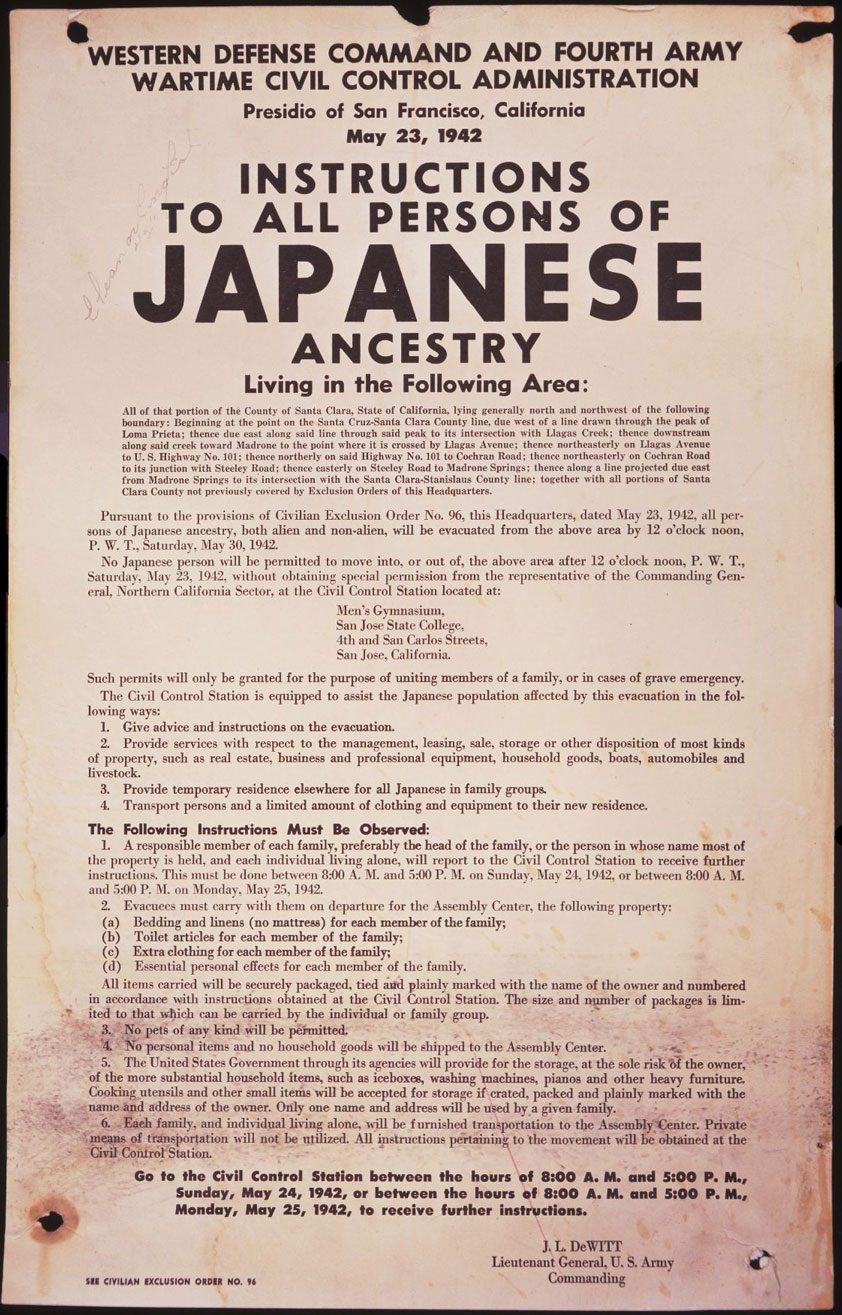
The general argument made by Mine Okubo in her work Citizen 13660, is that Japanese Americans were treated poorly. More specifically Okubo writes about her experiences in the internment camps and drew pictures of what it was like because you could not take pictures in the internment camps. She writes, “In the summer in Topaz we had a choice of being eaten by mosquitoes outdoors or suffocating with the heat indoors(p.758).” In this passage Okubo is suggesting that they were treated horribly, and no one took any account to care about them. In conclusion, it is Okubo’s belief that they were treated horribly.

In my view, Okubo is right because the Japanese Americans were treated horribly. For example in Okubo’s story they didn’t have any privacy when going to the bathroom, they had bad shelter and they were consistently worrying about what was going to happen to them next.  I conclude that this was a horrible thing that happened to Japanese Americans. It saddens me that all that bad stuff happened towards them. I am glad that we are able to read about it learn from it.  

Kenji pgs.746-747


The general point made by Mike Shinoda in his work Kenji, is that Japanese people are still treated poorly even after war. More specifically Shinoda describes the experience of his own family during the Japanese Internment camps of World War II. He writes, “My family was locked up back in ’42, My family was there it was dark and damp, And they called it an internment camp…(747)” In this passage Shinoda is suggesting that Americans treated Japanese Americans bad even after the war. They said such things like “Japs not welcome here” and they made it miserable to any Japanese American trying to find peace after the war. In conclusion, it is SHinoda’s belief that Japanese Americans were still treated terribly even after the war.

In my view Shinoda is right because there is plenty of evidence that they were not treated right at all. For example there was a sign that said, “Japs keep moving, this is a White Man’s neighborhood.” Kenji was trying to live a peaceful life and provide for his family, but he was persecuted for being Japanese, and he didn’t even do anything wrong. Therefore, I conclude that all Japanese Americans were treated poorly at this time in history, and looking back we can learn a great deal from mistakes like this. 


In Response to Executive Order pg. 743


The general argument made by Dwight Okita in his work In Response to Executive Order 9066: All Americans of Japanese Descent Must Report to Relocation Centers, is that not all Japanese Americans were giving secrets away and they weren’t trying to sabotage Americans. More specifically, Okita suggests that the some of the Japanese Americans had not done anything wrong. In the poem he writes, “I saw Denise today in Geography class. She was sitting on the other side of the room. You’re trying to start a war, she said giving secrets away to the Enemy, Why can’t you keep your big mouth shut? (p. 743)” In this passage, Okita is suggesting that some Japanese Americans did nothing wrong and they were still punished for it. In conclusion, it is Okita’s belief that the Executive order forced on all Japanese Americans, did not make sense.

In my view I think that Okita is right because not all of the Japanese Americans were spies and not all of them were trying to start a war. For example this little Japanese American child did not understand why her friend was accusing her of giving secrets away to the enemy, because she was not that type of person at all. Although some people say that it was to protect Americans, I maintain that this Executive order was wrong. Therefore I conclude that people should try not to make generalizations when a disaster comes to America.  


Executive Order NO. 9066 pg. 741


The general argument made by Franklin D. Roosevelt in his work Executive order NO. 9066 is that it is his duty to keep Americans safe from people attacking and sabotaging America. More specifically Roosevelt suggests that in this time when Pearl Harbor had just been attacked, he was going to incarcerate all Japanese Americans. He writes, “Whereas the successful prosecution of the war requires every possible protection against espionage and against sabotage to national defense material, nation defense premises…(741)” In this passage Roosevelt is suggesting that he has the executive order to put Japanese Americans into internment camps because he is trying to protect the country. In conclusion it is Roosevelt’s belief that if Japanese Americans were put in to these camps for the remainder of the war it would keep Americans from being sabotaged.

In my view Roosevelt is wrong because not all of the Japanese Americans would sabotage the Americans. It was a huge generalization to put the Japanese Americans in to these camps. For example that is like saying that after nine eleven we should have put all middle eastern people into camps. Although Roosevelt might object that it was for the good of our country, I maintain my belief that putting all Japanese people in to these camps was wrong. They were taken away from their families and their jobs and a lot of them didn’t do anything to receive such punishment. Therefore, I conclude that it was wrong to put all Japanese Americans into camps. I feel like Roosevelt could have made a better decision and thought before putting all of these good people into the camps.